Overview
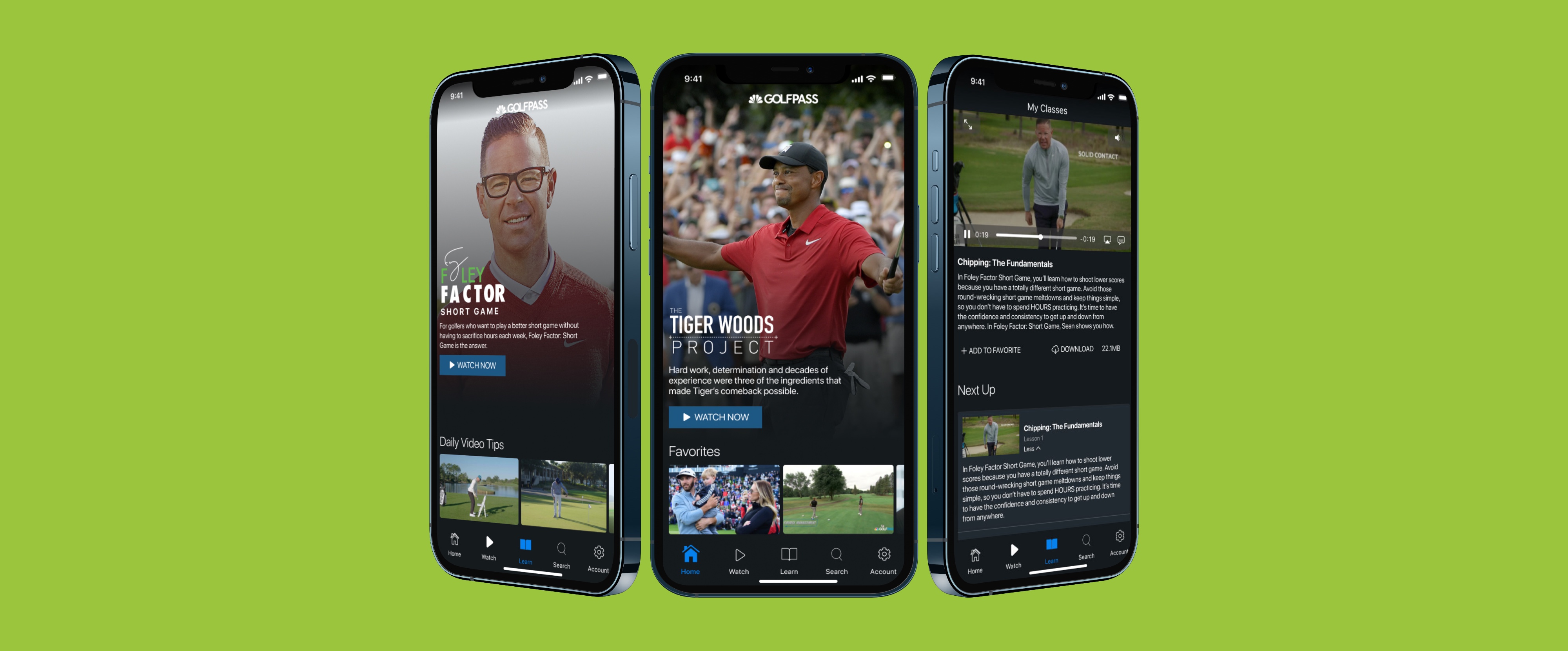
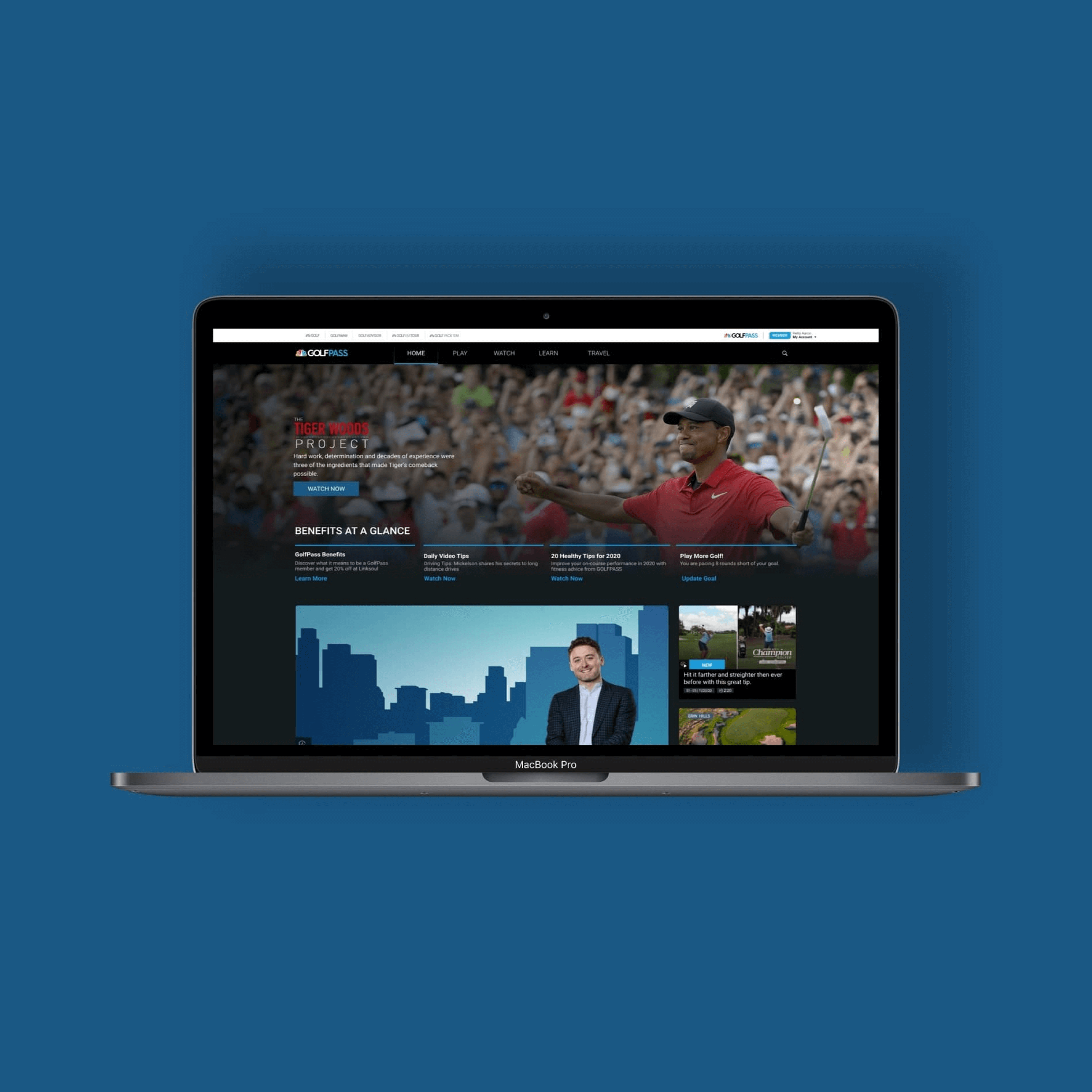
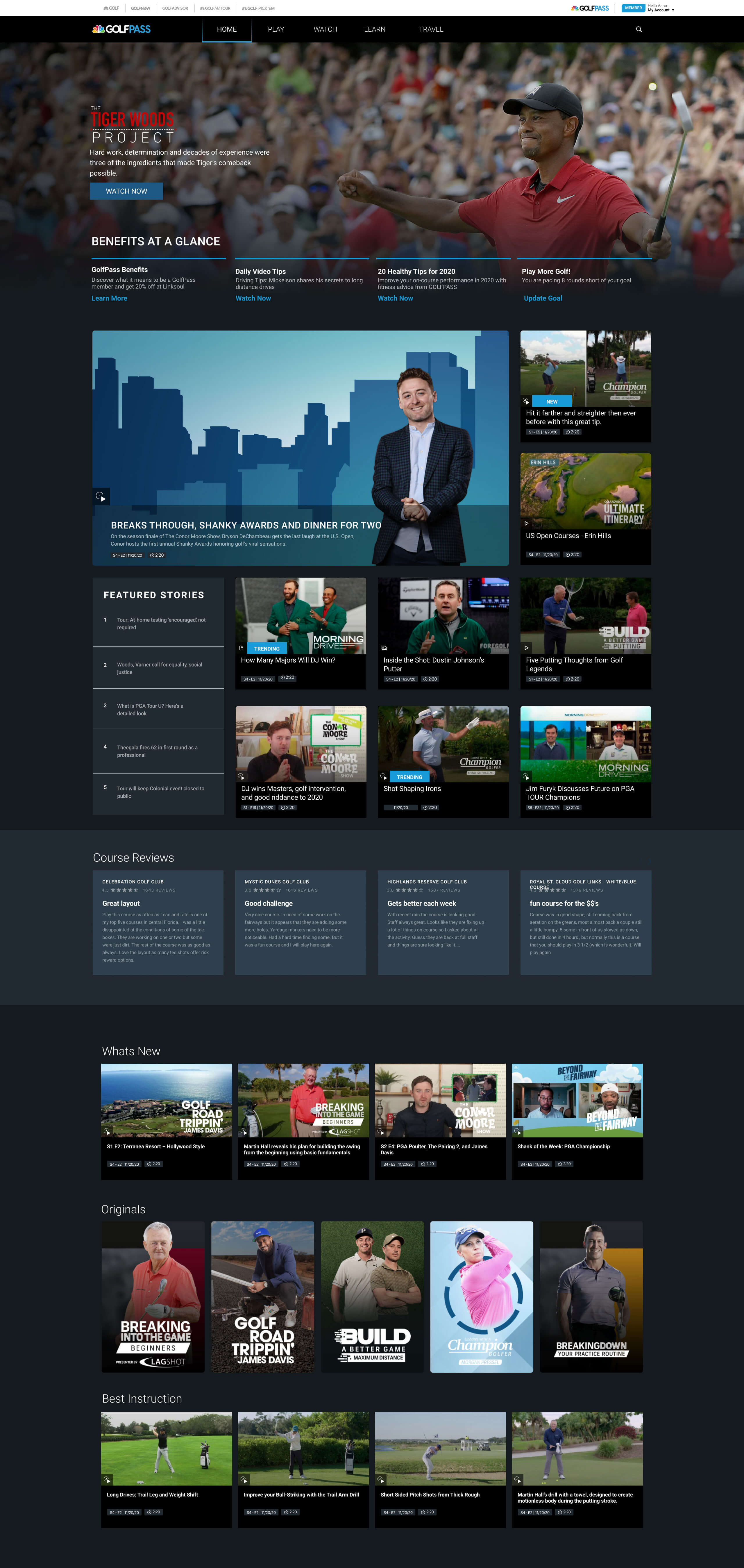
In my work on GolfPass, I designed a comprehensive digital ecosystem that serves as the premier destination for golfers seeking a blend of world-class entertainment and elite technical instruction. My goal was to create a cohesive, "always-on" companion that elevates the sport's digital presence to a premium, subscription-grade level. The platform is architected to handle high-production long-form video, real-time editorial content, and a deep library of instructional series, providing a seamless experience across web and mobile platforms for golfers of all skill levels.
Problem Statement
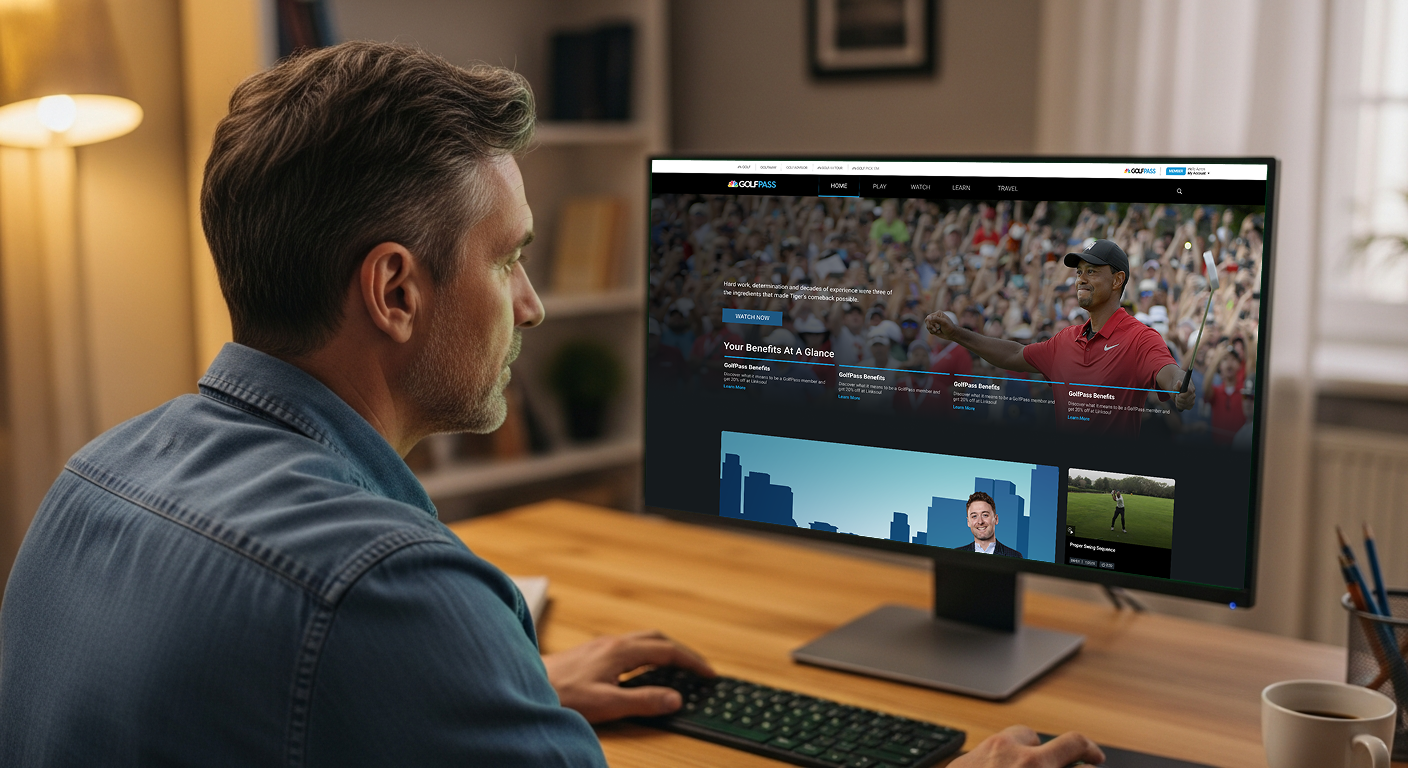
The core challenge was to reconcile the disparate ways golfers consume content—shifting from the lean-back engagement of a documentary to the lean-forward intent of a technical lesson. Legacy golf platforms often felt like fragmented repositories where instructional "how-tos" were buried in the news cycle. I needed to solve for intellectual switching costs : how to design an interface that feels equally appropriate for watching a cinematic feature like The Tiger Woods Project and for analyzing a granular spec-sheet for a location-based clinic. The objective was to eliminate navigation fatigue and create a unified home for the "complete golfer."


Solution
I implemented a sophisticated, media-centric design language that prioritizes visual immersion while maintaining high functional utility. Central to this solution was a robust, card-based architecture and a versatile "Dark Mode" aesthetic that allows the vibrant greens of the course photography to take center stage.
Dynamic Location & Service Cards: Leveraging a modular spec, I designed location tiles that pivot based on user intent—whether searching for a retail outlet, a pharmacy service, or a physician. Each card uses a clear metadata hierarchy, surfacing critical information such as "First available appointment" or "In-store pickup available" to facilitate immediate action.
Long-form Editorial & "Dark Mode" Immersion:
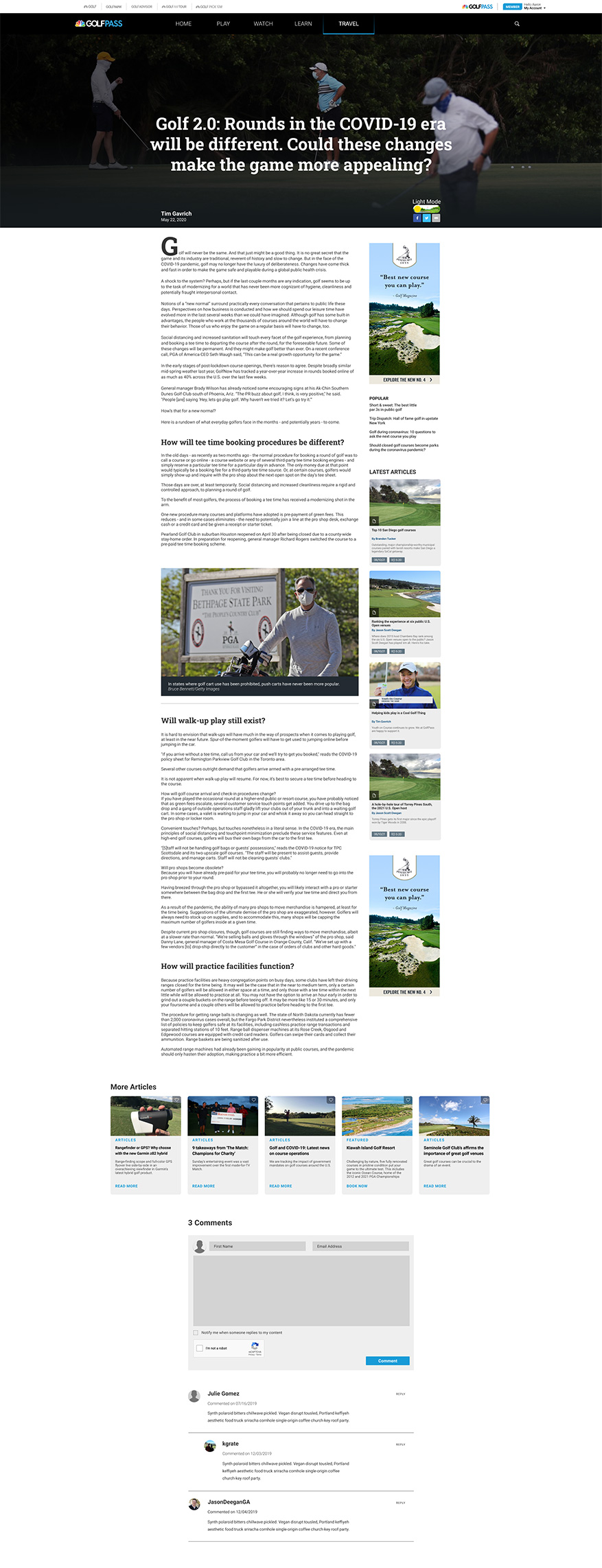
I designed a flexible long-form article framework that supports high-resolution imagery and pull-quotes. The inclusion of a user-controlled "Dark Mode" toggle ensures optimal readability and eye comfort, whether the user is reading technical tips on a sunny practice range or watching documentaries at home.Contextual Service Tiling: I built out a comprehensive "Location Tile Reference" system that standardizes layout, spacing, and anatomy across Retail, Clinic, and Pharmacy views. This ensures that regardless of the task, the user encounters a familiar, predictable interface that reinforces brand trust.